Showing posts with label Cadillac. Show all posts

Cadillac SRX Gets More Power for 2012


GM has announced that it will be offering its direct-injected 3.6-liter V-6 engine as standard equipment on the 2012 Cadillac SRX. The new engine will replace the current 3.0-liter V-6 and the 2.8-liter turbocharged V-6, which was discontinued earlier this year.

The engine is the same V-6 that's currently offered in the CTS, putting out 300 horsepower and 280 lb-ft of torque in the SRX. Cadillac says that in addition to the added power and torque, it also delivers its torque over a wider range than the 3.0-liter V-6, giving the SRX more flexibility. Speaking of flexibility, the new V-6 is also flex-fuel capable, able to run on gasoline, E85 ethanol, or any combination of the two.

The new engine will make the SRX one of the more powerful vehicles in the two-row luxury crossover market, outpowering the Lexus RX 350, Infiniti EX35, Mercedes-Benz GLK 350, and matching the BMW X3 xDrive35i in horsepower (although it gives up a little in torque to the Bimmer).

Cadillac also unveiled a host of new enhancements for the 2012 SRX. All 2012 Cadillac SRX models get standard Bluetooth, and luxury, premium and performance models receive a new standard heated steering wheel. A new machine-finish 20-inch wheel design is also standard on premium and performance models. Cadillac is even addressing a minor ergonomic quirk in the SRX, adding door lock buttons on the driver's and passenger's door panels. Previously, the button was only on the center console, although that button remains for the 2012 model year.carmax.blogspot.com
by thecarconnection.com
 
car news and review and  

2012 Cadillac SRX Upgrades To New V-6


2012 Cadillac SRX2012 Cadillac SRX
With the current model already surging in sales in the luxury crossover segment, the 2012 Cadillac SRX will add even more excitement for prospective buyers: a new engine with more horsepower and torque.
The added boost comes in the form of a new 300-horsepower 3.6-liter direct-injected V-6 engine that produces 260 pound-feet of torque. This is 35 more horsepower and 37 more pound-feet of torque than the current 2011 Cadillac SRX 3.0-liter engine generating 265 horsepower and 223 pound-feet of torque.
What does this added horsepower and torque do for the driver? Don Butler, Vice-president of Cadillac marketing says “the new engine will make the SRX more responsive for passing on the highway, entering freeways from on-ramps and climbing hills.”
Cadillac also says the new engine has a wider rpm range for maximum torque, which provides the driver more power across a wider range of speeds and driving conditions. It’s also FlexFuel capable, meaning it can run on gasoline, E85 ethanol, or any combination of the two. While EPA fuel economy ratings have not been finalized, Cadillac says it expects consumers will see “comparable real-world fuel-efficiency.” The current Cadillac SRX is EPA-rated at 18 mpg city/25 mpg highway.
Cadillac SRX models with the new engine arrive in dealerships in late summer. Pricing will be announced closer to production.
General Motors says the more powerful engine will build the sales momentum of the Cadillac SRX, number three best-selling mid-size luxury crossover in 2010 with sales of 51,094. Caddy is ratcheting up so far in 2011, with first-quarter SRX sales up 29 percent to 13,959 and aiming its sights on number-one in the segment, the Lexus RX350. Last year, the Lexus RX350 accounted for 95,790 sales. Number two best-seller in the segment is Cadillac SRX’s corporate sibling, the Buick Enclave, which posted 55,426 sales in 2010.
Interesting note, per Cadillac: the 2012 Cadillac SRX’s more powerful engine is projected to top the Lexus RX350 in both horsepower and torque. Lexus rates the RX350 at 275 horsepower and 257 pounds-feet of torque.
Other SRX enhancements for 2012
Besides the new engine, the 2012 Cadillac SRX will feature Bluetooth phone connectivity on all models, a heated steering wheel on upper trim levels, and door lock switches on the driver and passenger door panels. The new model will continue to have door lock switches on the center console.
The 2012 Cadillac SRX, available in front-wheel drive and all-wheel drive, will also offer new machined-face finish on its 20-inch wheels, which are standard on SRX performance and premium trim levels.


[General Motors]

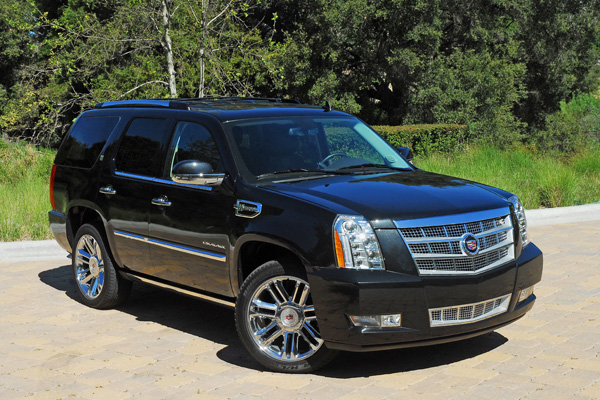
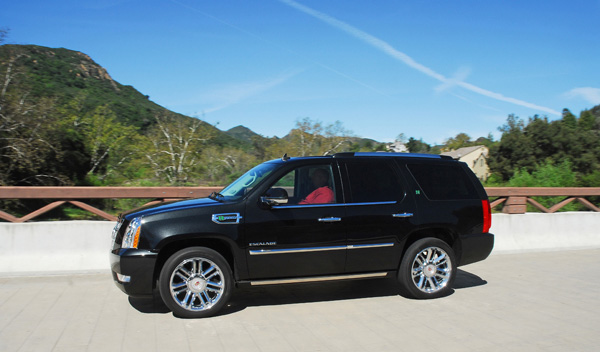
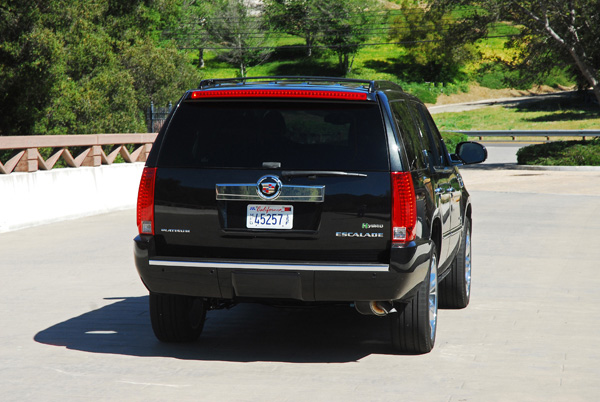
2011 Cadillac Escalade 4WD Platinum Hybrid Review & Test Drive


‘HIGHER LEVELS OF LUXURY, STYLE AND TECHNOLOGY’

Already the best selling full-size luxury sport utility on the world-wide market, Cadillac marks the 2011 model year by introducing a very special, limited-edition ‘Platinum’ Hybrid with even more luxury inside, more style outside and more technological features under the skin.
Cadillac’s innovative Escalade Hybrid is the world’s first hybrid full-size luxury SUV.  It achieves an EPA rated 20 miles per gallon in the city, up to a 33% fuel economy improvement over the non-hybrid model, and 23mpg/highway.
Escalade’s Hybrid’s patented two-mode hybrid system consists of an advanced electrically variable transmission and a 300-volt nickel-metal hydride Energy Storage System.  These systems work in concert with the standard 6.0 liter V8 Gen IV gasoline engine with Active Fuel Management and late-intake valve closing technology.

The key to Escalade’s two-mode hybrid system is that the hybrid system itself generates the electric power used to propel the vehicle.  When the brakes are applied or the vehicle is coasting, the electric motors within the hybrid system create electricity that is stored in the 300-volt battery.  This stored energy is then used to move the vehicle.  This cycle repeats itself continually to increase fuel economy.
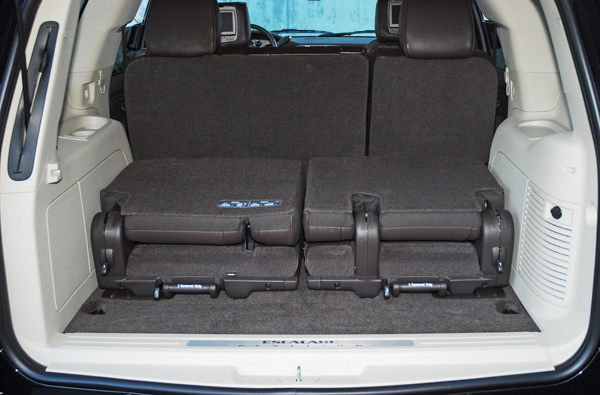
Providing power to the hybrid’s electrically variable transmission’s two electric motors is a 300-volt nickel-metal hydride Energy Storage System.  This battery pack is under the second-row seat, where it takes up virtually no additional space and does not interfere with second-or third-row entry or exit.
Additional features of the hybrid powertrain and supporting systems include: a fully blended regenerative braking system that captures energy that would otherwise by lost during vehicle deceleration; a 6.0 liter V8 engine with Active Fuel Management and late intake valve closing (Atkinson-cycle combustion process) for reduced pumping losses and better overall fuel economy; the engine is rated 332hp at 5,100rpm and 367lb.ft. of torque at 4,100rpm, and runs on regular unleaded gasoline; an Auto Stop Mode comes into play when the vehicle reaches 0mph, the gasoline engine may automatically shut down, leaving the engine off there by conserving fuel and emitting no tailpipe emissions; at low speeds such as during city driving or heavy stop-and-go traffic, the hybrid may use only electric power, and when engine loads permit the hybrid uses both engine and electric power sources to move the vehicle; an exhaust system and resonator specially tuned for the 6.0 liter LIVC engine’s Active Fuel Management operation that ensures comfortable interior acoustics and a pleasant exhaust note during both V4 and V8 operation; an electrically driven, 300-volt AC compressor reduces vibration and allows the HVAC system to cool the passenger compartment even when the gasoline engine is shut off, it includes the standard tri-zone climate control system; an electrically driven, 42-volt variable assist, rack & pinion power steering system reduces vibration and provides up to a 0.5mpg fuel economy improvement by reducing parasitic losses common in belt-driven hydraulic systems; the Energy Storage System cooling system’s internal fan is tuned to be quiet at low vehicle speeds, when occupants could more easily hear it; the Escalade’s Hybrid’s battery pack durability and reliability are maintained via optimized charge and discharge cycles, as well as a dedicated cooling system that draws air from the passenger compartment.  The vehicle’s emission control system, hybrid drive line and the energy storage system are warranted for eight year/100,000 miles.

When behind the wheel you never notice any of the hybrid or gasoline engine components at work.  All is silent and seamless as it switches between electric and gasoline/electric power modes.  What could be simpler in saving fuel and cutting down on emissions?
The new, 2011 limited-edition ‘Platinum’ model ups the ante with an exclusive package of luxury, style and technology.  On the outside the distinctive front fascia consists of a Bentley mesh styled upper and lower grille finished in platinum, unique 22X9in. aluminum alloy wheels finished in chrome and wrapped with Bridgestone 285/45R22in. performance steel belted radial tires, exclusive Platinum exterior badges, and vertically fitted LED headlamps that emulate the characteristics of natural daylight much more closely than traditional auto lighting, and are more environmentally friendly lasting 10 times longer than halogen bulbs.

Under the skin is GM’s exclusive Magnetic Ride Control system first seen in the Corvette that gives the Escalade Platinum more precise body motion control.  It is a real-time damping system-reading the road in millisecond intervals and changes damping in just 5 milliseconds.  It replaces conventional mechanical-valve shocks with electronically controlled shocks filled with a magneto-rheological fluid containing minute iron particles.  Under the presence of magnetic charge, the iron particles align to provide damping resistance almost instantly.  This high-tech feature gives the Escalade Platinum a smoother ride over poorly paved road surfaces and keeps body lean to a minimum during hard cornering.  It is also seamless and non-intrusive as you steer the Escalade during straight-line cruising on the freeway or when in the mountains slicing through curving roads.
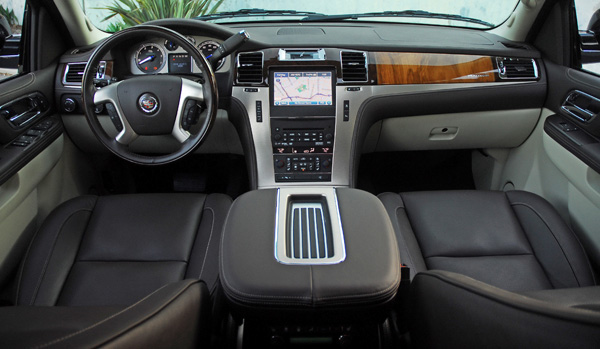
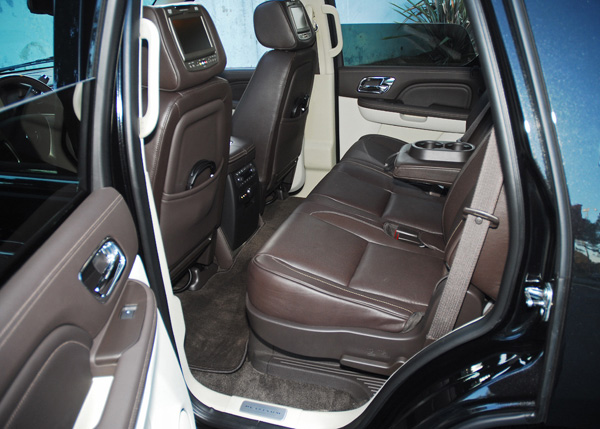
Inside the Escalade Hybrid Platinum is the latest example of Cadillac’s 21st. century return to handcrafted luxury detail.  The instrument panel, center storage console and door trim are all leather wrapped.  They feature decorative French seams that convey an elegantly tailored look and feel.  Materials include rich leather on the instrument panel, with olive ash and walnut burl wood inlays, chrome and aluminum trim.

Tehama aniline leather is unique to the Escalade Hybrid Platinum and is used to fully trim the first-and second-row seats.  Contrasting-color stitching is used on the French seams for a distinctive, luxurious appearance and the seatbacks feature embroidered Cadillac wreath and crest insignias.  The leather-covered seats are comfortable and convenient, with the industry-exclusive fold-and-tumble second-row feature that eases access to the third-row seat.  Additional Escalade Platinum standard interior features include Platinum-specific aluminum door sills with a  rear Platinum Escalade plaque just ahead of the step-up bumper, floor mats front/rear/cargo area; a heated, power tilting, leather/wood steering wheel; heated and cooled cupholders and a power liftgate that opens and closes with the touch of a button.  Also, the DVD entertainment system adds screens integrated into each front-seat headrest, in addition to the exiting roof-mounted screen.  Each front-row headrest screen has its own driver and input controls.  The headrest units can be operated independently or in tandem.  This system enables passengers in different seats to watch or listen to different entertainment choices.  Escalade Hybrid Platinum models also include the acclaimed Bose 5.1 Digital Surround system, as well as the eight-inch touch screen navigation and control of the DVD, CD, MP3 and XM satellite radio entertainment.  The pull-down eight-inch color screen in the middle of the headliner in the 2nd. row gives rear passengers 3-separate DVD’s to watch.
The ninth-generation OnStar technology has been revised and is more flexible with a voice recognition system now smart enough to interpret different sentences/phrases without actually hearing the exact 2-3 word commands from the user.  For example, if a subscriber wants to place a call using the Hands Free Calling System, if they simply say, “I would like to place a phone call” or “Need to make a phone call,” instead of saying the exact “dial” or “call” command, the system will understand that the user wants to place a call and process that command accordingly.  The system is capable of recognizing thousands of sentences that user may say.

Standard equipment in the new Escalade Platinum not mentioned above includes rear locking differential, automatic rear leveling system, power operated running boards-open the door they deploy, close the door they pull up and out of the way, reaview camera system, Bluetooth for phone, comfortable and supportive 14-way power front heated/cooled bucket seats, 2nd. row 60/40 bench, 3-passenger 3rd. row seat, power liftgate with liftglass, remote vehicle starter, power adjustable pedals, power windows/door locks with express up/down up front, driver information center with vehicle personalization for two drivers, power tilt/leather wrapped/wood heated steering wheel, universal home remote rear audio sound system controls, power fold/heated side mirrors, LED vertical rear lamps, chrome roof rack, variable-speed, intermittent wipers/washers, rear wiper/washer, 2-12-volt/1-120-volt plugs, 2nd. row/3rd headliner lamps, pull-down 2nd. row armrest/dual cupholders, self-dimming rearview mirror, power sliding sunroof, dual map lamps, overhead console with sunglass holder, full center console with a large, two-tier storage box, grab handles in the rear, dual, lighted vanity mirrors, storage slots in each front door, thick cut-pile carpeting, map pockets behind the front seats, Cadillac quartz clock, automatic headlamp control and chrome door handles.
Standard safety features include daytime running lamps, dual frontal airbags, head curtain side airbags, all seating rows, side impact airbags, thorax & pelvic protection for driver and front passenger, passenger sensing system, all three-point safety belts with load limiters/pretensioners up front, side blind zone alert in the sideview mirrors, StabiliTrack stability control system with traction control, 1-year OnStar with automatic crash response, tire pressure monitoring system, theft-deterrent system, rear child proof locks, remote keyless entry, front and rear crumple zones, and steel beams in each door.

The new, limited-edition Platinum Escalade Hybrid is one of the best and most efficient full-size sport utility vehicles available.  It has all of the ‘state-of-the-art’ features that you come to expect from Cadillac, plus a more efficient powertrain stretching you fueling needs.
The price for this fully-loaded Escalade Platinum Hybrid model is $88,140.00, and well worth it if it is the way you want to roll.

2012 Cadillac XTS / ETS Spy Photos - Future Cars

Update: Our spy shooters have nabbed several great new pictures of the XTS, including an interior shot, so we’ve updated the story below. Additionally, this article previously ran with a few shots of another future Caddy in the mix. Those pictures are of the smaller ATS; fresh images of that car are here.
We’ve known for some time that Cadillac is working on a smaller rear-wheel-drive car to battle the BMW 3-series, likely to be called ATS. Other intel has recently uncovered plans to crown the brand’s range with something big.
Big Cars Can Beget Big Sales
The car seen here isn’t the latter model, but it is big. Previewed by a concept of the same name and seen here lightly camo’d, the XTS is a large, front-wheel-drive sedan that’s set to replace the aging STS and for-the-aged DTS. Yeah, we had relegated those cars to the back of our minds, too, but as irrelevant as they may seem, Cadillac still needs a bigger-than-CTS sedan; together, the STS and DTS still make up a decent chunk of Cadillac’s U.S. sales—about 16 percent in 2010. That, and the Chinese market will eat this thing up. (We’ve heard some rumors that the name may be changed to ETS for production, so don’t be too surprised if that happens.)
The Buick LaCrosse will lend a hand—or, more precisely, a platform—sharing its Epsilon II underpinnings. The XTS is likely to be the longest Epsilon-based car, quite possibly outdoing the LaCrosse’s 197.0-inch stem-to-stern measurement. The 3.6-liter, direct-injection V-6 that’s also used in the CTS will be the only engine at first. Later, Cadillac will add a hybrid version, possibly a plug-in, using the front-drive two-mode system briefly offered on the Saturn Vue. A smaller, less powerful V-6 and a turbocharged six making well over 300 hp also are possibilities for the future, as is the addition of all-wheel drive.
Concept Shape Retained, Interior Shaping Up Nicely
As far as extra-stretched Buicks go, the XTS looks pretty good. At least covered in camo, this mule looks a lot less ungainly (more gainly?) than the XTS Platinum concept. The greenhouse shape is similar to that of the concept; a skillful tape artist has obfuscated the detail, but it’s pretty clear that the backlight’s angle has been preserved, draping back over the trunk and likely hiding the cargo compartment’s bigness. Under the front camouflage, it appears this mule is wearing a spiffier grille that’s very similar to the concept, complete with a single section of the egg crate appearing on its chin.
While the concept’s proportions may not have been graceful, its interior was, and we’re delighted to see a center stack in these spy photos that looks a lot like the concept’s. Note the lack of physical buttons and switches, meaning this brightly-trimmed interface is going touch-sensitive like Lincoln’s controversial MyLincoln Touch. On that large central screen, we’re expecting to see a version of GM’s recently announced, MyLink infotainment system. Hopefully it will be accompanied by a few unique features for this big, not-a-flagship sedan.
As to when we might see the results and what’s wrapped around the new cabin, we expect the car to show up within the year. The “where” is a little more tricky; Cadillac may decide to unveil it at a Chinese auto show or one on our turf. We’ll let you know when it happens.
 

Cadillac Planning RWD Sedan to Go After the 7-series and S-class . And Maybe Even the Rolls-Royce Phantom


Cadillac has talked about building a true flagship for years—the beautiful Sixteen concept, shown above, dates to 2003—and it appears that a rear-wheel-drive luxury sedan is finally taking shape. The brand’s bosses have realized that the XTS, a stretched derivative of the front-wheel-drive Epsilon platform also underpinning the Buick LaCrosse and Saab 9-5, will not quite be enough to scare the Audis and BMWs of the world, let alone cement the automaker’s position building the Cadillac of automobiles.
According to insiders, Cadillac’s new flagship model will be built on a standalone rear-drive platform, dubbed Omega, rather than sharing underpinnings with the CTS or upcoming ATS. As we predicted in the past, it will be powered by six- and eight-cylinder engines, and all-wheel drive would be optional. A hybrid version could follow later, a diesel— which would account for the bulk of the vehicle’s sales in Europe—won’t. The new, impressively styled sedan will be launched in 2014 as a 2015 model.
Naturally, offering rear-wheel drive and a V-8 won’t be sufficient for Cadillac to take on the world. A Cadillac flagship pointed squarely at the Mercedes-Benz S-class and BMW 7-series will need to be jam-packed with safety and comfort technology, and requires cabin accommodations indulgent enough to make Buckingham Palace’s interior designer weep.

And Now, to Rolls-Royce
We also have learned that General Motors is considering an even more exciting use for the Omega platform—though it’s one we’re skeptical will see the light of day. Our sources tell us that Cadillac is looking at building a super-luxury sedan to compete head-on with the likes of the Rolls-Royce Phantom. (Yes, someone at GM actually referred to Rolls-Royce’s locomotive.) It’s far from a done deal, but it would be great to see such a halo car fighting for American supremacy in billionairemobiles.
No matter what happens, we’re guessing the Cadillac Sixteen’s 13.6-liter V-16 engine won’t be nestled in the engine bay. What a shame.
by blog.caranddriver.com

2013 Cadillac SRX Plug-In Hybrid Spy Photos – Future Cars


A plug-in powertrain will power the touch-sensitive interior of Caddy’s crossover (and the rest of the car, too).
Cadillac can’t seem to settle on a powertrain for its hot-selling SRX. The second-gen crossover was introduced in 2010 with Saab’s turbocharged 2.8-liter six as an option (it was sacked early this year; no big loss) and a 3.0-liter V-6 as the base engine (also gone for 2012). Both are being replaced by GM’s 3.6-liter V-6, which will be the only available motivator for now. A plug-in hybrid version—caught here by our covert photogs—should join the lineup soon enough. The 2013 model year also will bring a mild interior update with touch-sensitive controls.
by blog.caranddriver.com

Ch-Ch-Changes: 2012 Cadillac SRX

For the 2012 model year, the Cadillac SRX gets a new, more powerful base powertrain and other luxury features added to its standard roster list.
All SRX models now get a standard 300-horsepower, 3.6-liter V-6 producing 260 pounds-feet of torque, mated to a six-speed automatic transmission. That engine replaces both the standard 265-hp, 3.0-liter V-6 and the upgraded 300-hp, turbocharged 2.8-liter V-6, according to Cadillac spokeswoman Jordana Strosberg.
We thought the 3.0-liter V-6 offered modest power, and while the 2.8-liter accelerated well, its premium fuel and subpar gas mileage left us wanting. The 3.6-liter is already used in vehicles like the Cadillac CTS, which has great acceleration.
The new V-6 can run on E85 fuel, and Cadillac expects similar gas mileage as the 3.0-liter V-6, which is rated at 18 mpg city and 25 mpg highway. All-wheel drive is still available.
Other added features include standard Bluetooth connectivity on all trims. Door locks are now placed on the driver’s side and passenger side doors instead of just on the center console. Luxury, Performance and Premium trims now get a heated steering wheel. Performance and Premium trims also get standard 20-inch wheels.
The 2012 SRX will go on sale later this summer. Pricing will be announced later, according to Cadillac.
By Colin Bird

2012 Cadillac CTS: Ch-Ch-Changes

2012 Cadillac CTS sedan Cadillac review and newsFor the 2012 model year, the Cadillac CTS sedan, coupe and wagon get a new V-6 engine, exterior updates and some trim reshufflings.
The updated 3.6-liter V-6, which comes equipped on Cadillac’s Performance and Premium trims, is now rated at 318 horsepower, up from 304 hp in the previous model. Despite the power boost, the new engine has the same fuel-economy ratings — an EPA-estimated 18/27 mpg city/highway — as the 2011 model.
Lower trim models will continue to be offered with a 270-hp, 3.0-liter V-6. The new 3.6-liter V-6 engine is mated to a six-speed automatic transmission; the six-speed manual option is no longer available on the 3.6, but it’s still an option with the 3.0. Rear- and all-wheel drive are available on all trims.
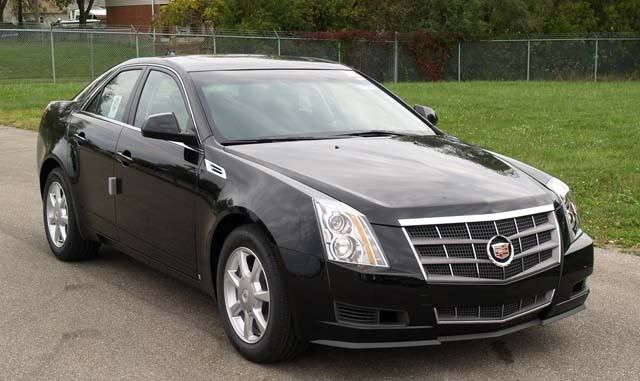
Along with the new engine, Cadillac has updated the CTS grille. It now has a more pronounced two-dimensional grid design as opposed to the somewhat three-dimensional mesh grill on the 2011 model. According to Cadillac, the grille and Cadillac badge have more detail to them than the ones they replace (an up close photo is provided below).
Cadillac also added a new feature package, called the Touring Package, to its lineup for the model year. The package includes dark finishes to the exterior, metal pedals, a darkened wood trim and suede-trimmed upholstery. The feature suite is available with either the 3.0-liter or the 3.6-liter V-6. When equipped with the 3.6-liter, the Touring Package also comes with Recaro seats and 19-inch wheels.
Cadillac will announce pricing and more trim details soon. The model goes on sale in late summer.
By Colin Bird

Evolution of Car Logos review and news icon


Evolution of Car Logos review and news icon
 review and news  icon
his article should come in handy for the next time you’re stuck in traffic: have you ever wondered why the Audi in front of you has a logo of four interlocked rings? Did you know that the Cadillac emblem was inspired by a family crest of a nobleman who later turned out to be a fraud? Or that Volkswagen was Hitler’s idea?
We took a look at the evolution of tech logos before. Today, let’s take a look at the fascinating stories behind the logos of some of the most popular cars in the world:

Alfa Romeo


Source: Cartype
Surprise! Alfa Romeo, the car manufacturer and pride of Italy, traced its beginnings to France. In 1910, Milan aristocrat Cavaliere Ugo Stella collaborated with the French car company Darracq to market the line in Italy. When the partnership failed, Stella moved the company and renamed it Anonima Lombarda Fabbrica Automobili (Lombard Automobile Factory, Public Company) or A.L.F.A.
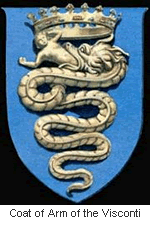
Alfa Romeo’s distinctive logo was created in 1910 by a draftsman named Romano Cattaneo. One day, while waiting for a tram at the Piazza Castello station in Milan, he was inspired by the red cross in the Milan Flag and the Coat of Arms of the noble House of Visconti, which featured a biscione (grass snake) with a man in its jaws, symbolizing "Visconti’s enemies that the snake [was] always ready to destroy." (Source) Two Savoia dynasty knots separated the words ALFA and MILANO.
The Romeo part came in 1916 when Neapolitan businessman Nicola Romeo bought the company and converted its factories to produce munitions and machineries for World War I. After the war, the company went back to producing cars and took on its owner’s last name to become Alfa Romeo.

Aston Martin
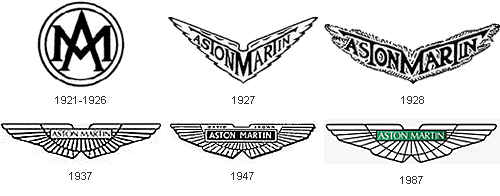
Evolution of Car Logos review and news icon
In 1913, Lionel Martin and Robert Bamford founded a company that later would become Aston Martin. At the time, Martin & Bamford Limited produced Singers racing cars, but the duo wanted to create a more sophisticated model of their own. They named their first car Aston Martin after the founder Lionel Martin and the Aston Clinton hill climb racing course where their Singers car had won previously.
We can’t talk about Aston Martin without mentioning James Bond. In 1959, Ian Fleming put his super spy James Bond in an Aston Martin DB Mark III. When it was made into a movie in 1964, Bond drove an updated, supersleek silver Aston Martin DB5 (complete with machine gun, passenger ejector seat, and revolving number plates!)
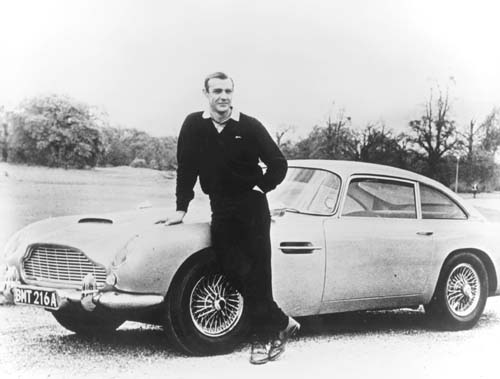
James Bond and his Aston Martin DB5 in Goldfinger
Interestingly, Ian Fleming himself didn’t drive Aston Martin. He preferred the 1963 Studebaker Avanti!

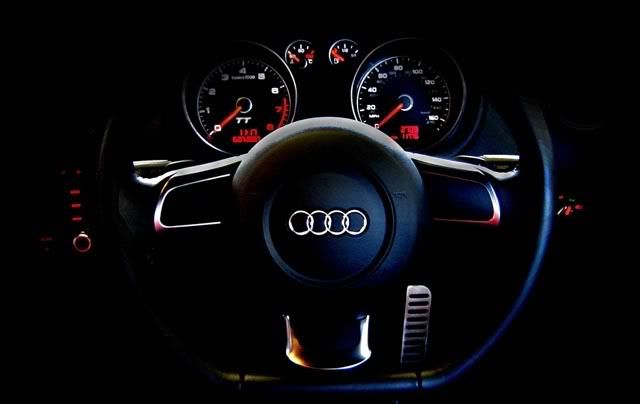
Audi
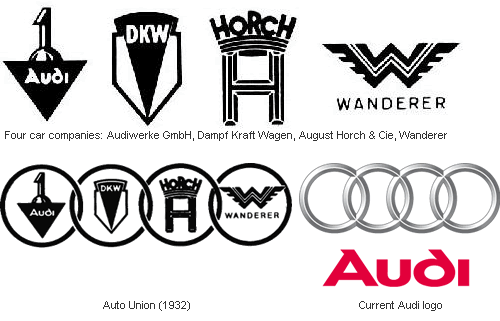
Evolution of Car Logos review and news icon
German engineer August Horch, who used to work for Karl Benz, founded his own automobile company A. Horch & Cie in 1899. A decade later, he was forced out of his own company and set up a new company in another town and continued using the Horch brand. His former partners sued him, and August Horch was forced to look for a new name.
When Horch was talking to his business partner Franz Fikentscher at Franz’s apartment, Franz’s son came up with the name Audi:
During this meeting Franz’s son was quietly studying Latin in a corner of the room. Several times he looked like he was on the verge of saying something but would just swallow his words and continue working, until he finally blurted out, "Father – audiatur et altera pars… wouldn’t it be a good idea to call it audi instead of horch?". "Horch!" in German means "Hark!" or "listen", which is "Audi" in Latin. The idea was enthusiastically accepted by everyone attending the meeting. (Source: Wikipedia, A History of Progress (1996) – Chronicle of the Audi AG)
And so Audiwerke GmbH was born in 1910. In 1932, four car makers Audi, Horch, DKW, and Wanderer merged to form Auto Union. The logo of Auto Union, four interlinked rings that would later become the modern Audi logo, was used only in racing cars – the four factories continued to produce cars under their own names and emblems.
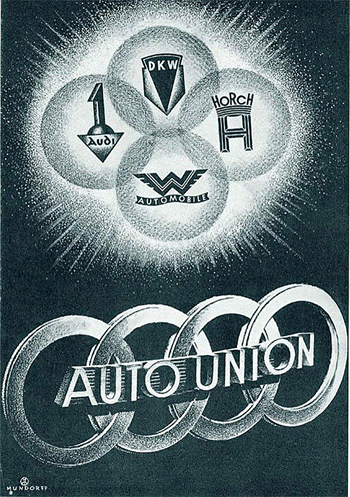
Four car companies became Auto Union (1932)
Fast forward to 1985 (skipping a whole lot of history), when Auto Union ultimately became the Audi we know today.

BMW


Source: Motorcycle
In 1913, Karl Friedrich Rapp and Gustav Otto founded two separate aircraft factories that would later merge to form BMW or Bayerische Motoren Werke AG (Bavarian Motor Works). Rapp and Otto actually had little to do with BMW’s manufacturing of cars. Josef Popp, Max Friz and Camillo Castiglioni were the ones who played big roles in making BMW a modern car manufacturer.
Source: Cartype
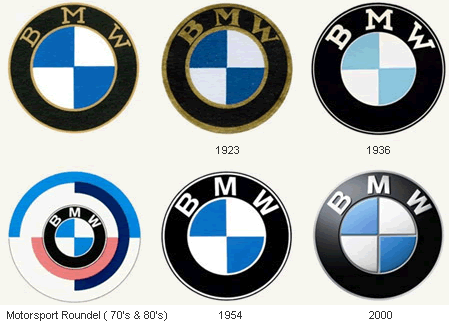
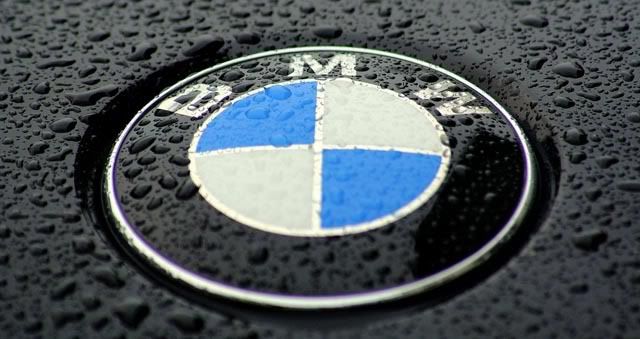
The circular BMW logo was a representation of a spinning propeller of a Bavarian Luftwaffe. At the time, aircrafts were painted with regional colors and the colors of the Bavarian flag were white and blue. It is said that the pilot saw the propeller as alternating segments of white and blue, hence the logo. The roundel was a nod to Karl Rapp’s original company.
During World War I, BMW was a major supplier of airplane engines
(and later airplanes such as the Red Baron)
(thanks Redditors!) to the German government. After the war, Germany was forbidden by the Treaty of Versailles to manufacture airplanes and BMW was forced to change its business: it first made railway brakes before making motorized bicycle, motorcycles and cars.
Update 3/6/08: Neatorama readers Dan S. and Bruce Kennedy who pointed out that the idea of BMW logo being derived from spinning propeller was actually an advertisement by the company (scroll down about halfway). Also thanks to klaus who pointed us out to the logo of EMW, which BMW took over in 1928.

Buick


Early Buick emblems (source: Buick Car Club of Australia)
The Buick Motor Company was founded in 1903 by David Dunbar Buick, a Scottish-American inventor who invented the overhead valve engine. If you didn’t recognize the name, you’re not alone – but remember this: Buick, a high school drop out founded a company that later became the world’s largest auto company, General Motors.
At 15 years of age, Buick dropped out of school to work for a plumbing fixture manufacturer. When that business failed, Buick and his friend took it over – but within a few years, Buick had an argument with his partner because he preferred to spend his time tinkering with car engines. Buick sold his share in the company and quit.
With the money, Buick founded the Buick Motor Company and within a few years ran it to the ground. He was kicked out of the company by his partner William "Billy" Durant in 1906 and later sold his stock for a mere $100,000. Had he held on to his shares, it would’ve been worth well over $100 million today. In his later years, Buick held low-paying jobs and couldn’t even afford a telephone. He died penniless as an inspector at the Detroit School of Trades. Ironically, years later Durant himself would be forced out. General Motors, the company that Durant built, refused him pension and he died almost penniless. (Source)

Buick crests and tri-shields (source: Buick Car Club of Australia)
Back to the logo story: Early Buick logos were variations of the cursive word "Buick." In 1930s, General Motor Styling researcher Ralph Pew found a description of the Scottish "Buik" [sic] family crest and decided to use it as a radiator grille decoration. In 1960, the logo incorporated three such shields, to represent the three Buick models then built: LeSabre, Invicta, and Electra.
In 1975, Buick changed their logo to a hawk named "Happy" with the launch of their Skyhawk line. However, in the late 1980s, as the Skyhawk car was retired, Buick went back to the tri-shield logo.

Cadillac


Source: car-nection.com, who has lots more Cadillac emblems.
When Henry Ford left his second automobile company, Henry Ford Company (see below), his financial backers tried to liquidate the company’s assets. An engineer named Henry M. Leland persuaded them to continue the company instead. They listened, and so Cadillac was born.
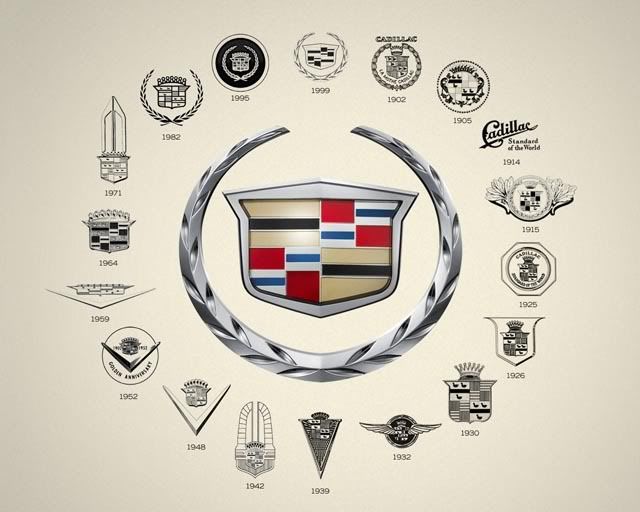
Cadillac’s first logo was based on a family crest of a minor aristocrat that the company was named after: Antoine de La Mothe, Seigneur de Cadillac (Sir of Cadillac). In 1701, de La Mothe founded Fort Pontchartrain which would later become Detroit. Cadillac was named after de La Mothe in 1902, following a bicentenary celebration of the founding of the city.
Problem was, de La Mothe was never a nobility! Born Antoine Laumet, de La Mothe was forced to leave France for America under a mysterious circumstance (some say he committed a crime or was unable to pay his debt). In the New World, he was able to assume a new identity and cobbled together a famiy crest with elements "borrowed" from, shall we say nobler sources.
In 1998, Cadillac had a new design philosophy called "art and science" and had its logo redesigned. Gone were the six birds called the merlettes, the crown, and the entire fabricated de La Mothe family crest as the company tried to shake up its stodgy image. The new logo made its debut a few years later, looking positively like it was made by Piet Mondrian!

Fiat


Source: Fiat
Fiat, then named Fabbrica Italiana Automobili Torino (Italian Automobile Factory of Turin), was founded in 1899 by a group of investors, including Giovanni Agnelli who later became its Managing Director. Agnelli bought his shares for $400 (about $10,000 in 2007 money). It’s worth billions now, and there had been an Agnelli in Fiat management ever since. Regardless or perhaps because of its wealth, the Agnelli clan remained a fractious and complicated group of people.
Supposedly, the famous Fiat "scrabble tiles" logo of the 1960s was designed by the company’s Chief Designer who was driving past the Fiat factory during a power outage and saw an outline of the factory’s neon sign against the dark sky (Source: The Language of Auto Emblems)

Ford
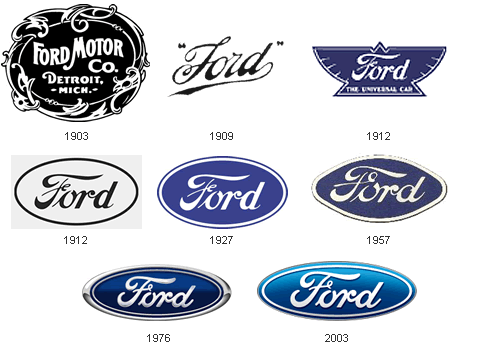

Most people know that Ford was founded by (who else?) Henry Ford. What most people didn’t know was that this was his third automobile company. Ford experimented with cars while working for Thomas Edison, and left to found his first auto company, The Detroit Automobile Company, which went bankrupt in just 2 years. He then built a race car and founded Henry Ford Company. Ford left that one after just one year (the company later became Cadillac – see above).
In 1902, Ford went on to create his third automobile company, the Ford & Malcomson, Ltd., and almost lost that one when sales were slow. He was unable to pay his bills to John and Horace Dodge, who supplied parts. Ford’s partner brought in a group of investors and even convinced the Dodge Brothers to accept shares in the company, which was renamed Ford Motor Company. Later, the Dodge Brothers went on to form their own car company (can you guess what?)
In 1909, Childe Harold Wills, Ford’s first chief engineer and designer (who also help to design the Model T), lend a script font that he created to make his own business card, to create the Ford logo. The famous blue oval was added later for the 1927 Model A – it remained in use until today.

Mazda


Source: Mazda [wikipedia] and Mazda Brand Evolution
Mazda began its life in 1920 as the Toyo Cork Kogyo Co. in Hiroshima, Japan. At the time, there was a cork shortage because of World War I, so the company was founded to process a cork substitute made from the bark of an Abemaki or Chinese cork oak tree. It was a good idea at the time, but shortly afterwards Japan could get real cork again and the company foundered.
In 1927, Jujiro Matsuda came onboard and the company began manufacturing tools, three-wheeled "trucks" and then cars. After World War II, the company formally adopted the name Mazda, which depending on who you ask, stood for the Zoroastrian god Ahura Mazda or an anglicized pronunciation of Matsuda the founder’s name (or both).
In the 1936 logo, the M shaped curve was inspired by the emblem of Hiroshima city. The 1991 and 1992 logos symbolized a wing, the Sun and a circle of light. Mazda’s current logo, nicknamed the "owl" logo, was designed by Rei Yoshimara in 1997. The stylized "M" was meant to look like stretched wings, but many people saw a stylized tulip instead.

Mercedes-Benz

The modern Mercedes-Benz traced its lineage to a 1926 merger of two car companies, Daimler-Motored-Gesellschaft or DMG, founded by Gottlieb Daimler (along with Wilhelm Maybach), and Benz & Cie, founded by Karl Benz. Both Daimler and Benz worked independently to invent internal combustion-powered automobiles. Their factories were actually just 60 miles apart, yet they didn’t know of each other’s early work.
After World War I, the German economy was in tatters, and to survive, the two companies formed a syndicate in 1924, where they would continue to sell their separate brands but would standardize design, share purchasing and advertising. In 1926, however, the two companies merged into Daimler-Benz.
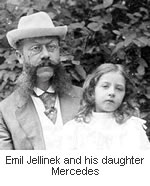
The name "Mercedes" came about in 1900. A wealthy European businessman and racing enthusiast named Emil Jellinek began selling Daimler’s cars. He wanted a faster car, and specified a new engine to be designed by Maybach and to be named after his 10-year-old daughter’s nickname, Mercédès or Spanish for
"grace."
"Mercy" (See below)
Jellinek was quite a character. He used to pepper DMG’s engineers with colorful suggestions and criticism such as "Your manure wagon has just broken down on schedule" and "You are all donkeys". However, as he actually sold a lot of cars, he was tolerated and even listened to. Later, Jellinek would add Mercedes to his own and became Emil Jellinek-Mercedes. (Source: My Father Mr. Mercedes by Guy Jellinek-Mercedes and MBUSA Biographies)
The star in Daimler’s logo came from an old postcard where Gottlieb Daimler had drawn a star above the picture of his house and wrote that "this star would one day shine over [his] own factory to symbolize prosperity." The three-pointed star symbolized Daimler’s ambition of making vehicles "on land, on water and in the air." (Source: Daimler)
After the merger, a new logo was designed. It combined the symbols of the two companies: the three-pointed star of DMG and the laurel wreath of Benz.
Update 2/18/08: There’s a dispute on the origin of the name “Mercedes.” According to Baby Names World, Mercedes is a girl’s name of Spanish origin meaning “Mercy.” It was taken from the Virgin Mary’s liturgical title “Maria de las Mercedes” (Mary of the Mercies; ‘Our Lady of Ransom’):

Latin ‘mercedes’ originally meant ‘wages’ or ‘ransom’.
In Christian theology, Christ’s sacrifice is regarded as a ‘ransom for the sins of mankind’, hence an ‘act of ransom’ was seen as identical with an ‘act of mercy’.

Mitsubishi

Source: Mitsubishi
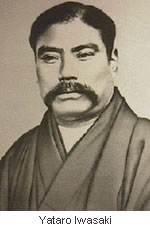
In 1854 feudal Japan, a man named Yataro Iwasaki, son of a provincial farmer whose grandfather sold the family’s samurai status to settle some debt, began his career on the wrong foot: he was called home from school at the age of 19 when his father was injured in a dispute with the village leader. Iwasaki asked a local magistrate to hear his case, and when refused, accused the man of corruption. Iwasaki was promptly jailed for seven months.
Fast forward to 1868: Iwasaki was working for the Tosa clan when the Meiji Restoration abolished Japan’s feudal clan system. He acquired Tsukumo Shokai, the Tosa clan’s shipping business and renamed it Mitsubishi in 1873.
It was a fourth-generation Iwasaki, a man named Kayota Iwasaki, who turned Mitsubishi into a giant corporate group that included an automobile manufacturing company, Mitsubishi Motors.
The name Mitsubishi was a combination of the words "mitsu" (three) and "hishi" (water chestnut, used in Japan to mean a rhombus or a diamond shape). The official translation of the name was "three diamonds."
The Mitsubishi logo was a combination of the Iwasaki family crest, three stacked diamonds, and the three-leaf crest of the Tosa Clan.

Peugeot

Peugeot got its start in 1812 in Montbeliard, France, when two brothers, Jean-Pierre and Jean-Frédéric Peugeot converted their windmill into a steel mill. Their first products were rolled steel for saw blades and clock springs, as well as cylindrical steel rods. For decades, the Peugeot family business made metal goods, machine tools, crinoline dresses, umbrellas, wire wheels, irons, sewing machines, kitchen gadgets and by 1885, bicycles.
Indeed, Peugeot’s entry into the automobile business was by way of bicycles. At the time, the company was one of the largest bicycle manufacturers in France. In 1889, Armand Peugeot created the company’s first steam-powered car. A year later, he abandoned steam in favor of gas-powered internal combustion engine after meeting Gottlieb Daimler.
The Peugeot "lion" logo was designed by jeweler and engraver Justin Blazer in 1847. It was based on the flag of the Région Franche-Comté. The logo was stamped on Peugeot kitchen gadgets to denote the quality of their steel. It took Armand 14 years to convince his family that cars could be a moneymaker. Only then did they allow him to use the Peugeot lion logo. (Source: Independent)
Now, you may not drive a Peugeot car, but I bet you’ve used a Peugeot invention of 1842: the peppermill. The mill’smechanism was so reliable that it remained virtually unchanged until today.

Renault


Source: Renault
Louis Renault was 21 when he made his first car in the backyard of his parent’s home. He soon got orders for cars, so in 1898, along with his brothers and friends, Louis opened the company Société Renault Frères in Boulogne-Billancourt, France.
The first Renault logo, drawn in 1900 featured the three initials of the Renault brothers: Louis, Ferdinand and Marcel. In 1906, the logo changed to a front end of a car enclosed in a gear wheel.
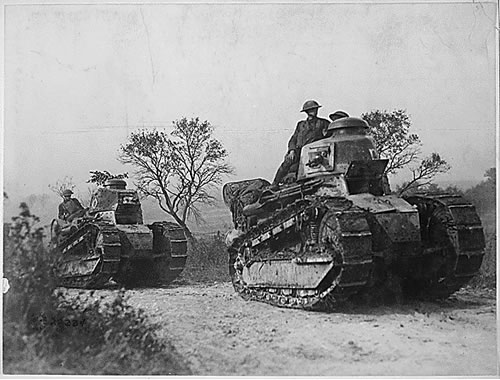
Renault FT-17 tank, driven by American troops, going forward to the battle line in the Forest of Argonne. (Source: The National Archives)
During World War I, Renault manufactured light tanks for the Allies called the Renault FT-17. This was so popular that after the war, Renault actually changed its logo into a tank. The diamond shape was introduced in 1925 and remained until today. The modern Renault logo was created in 1972 by Victor Vasarely [offical website | wikipedia], the father of Op art (or optical art).

Saab

If you’ve ever seen a Saab car commercial, then you’d know that the company was "born from jets". You wouldn’t know it from the car’s staid style, but historically this was accurate: In 1937, an aircraft company called Svenska Aeroplan Aktiebolaget ("Swedish Aeroplane Limited" or simply SAAB) was created to meet the needs of the Swedish Air Force.
When World War II ended, SAAB the airplane company started making cars to diversify its business. The first car it made was a prototype called the the Saab 92001 or ursaab (meaning "original Saab") in 1946. It was test-driven for nearly 330,000 miles (530,000 km) in utter secrecy, usually on narrow and muddy forest roads in the early mornings or late nights.
In 1947, the Saab Automobile company was incorporated. The company’s first car was the Saab 92, named because it was simply the company’s 92nd design project (the previous 91 had all been aircraft).
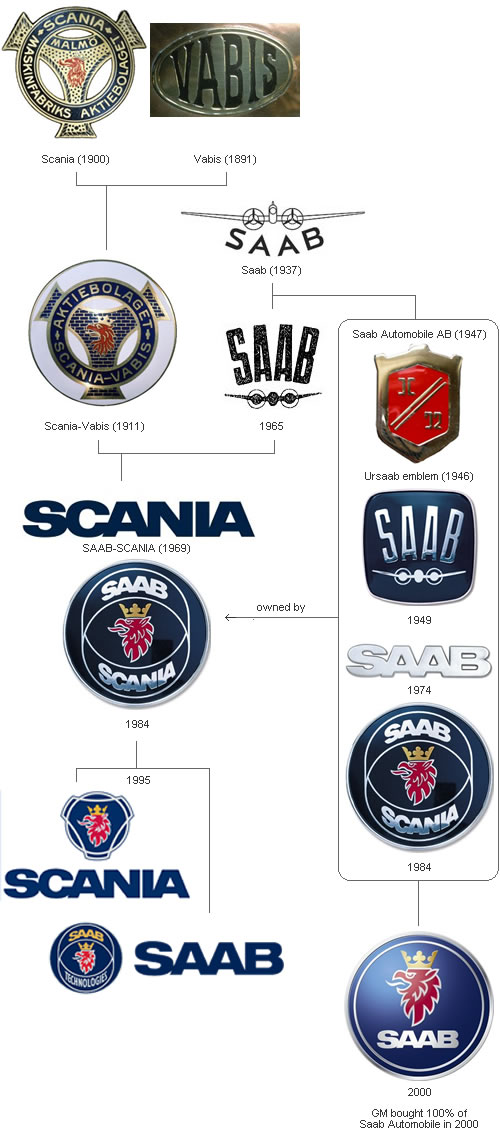
The griffen logo, featuring the head of a mythological beast that had a body of a lion and head and wings of an eagle, came from Vadis-Scania, a truck manufacturer that merged with SAAB (airplane) company. The griffen was a coat of arms of the province Scania.
In 2000, Saab Automobile company was bought out by General Motors, and thus no longer had any connection with SAAB outside of its history and logo similarities.
Confused? Don’t worry about it, just enjoy the pictures.

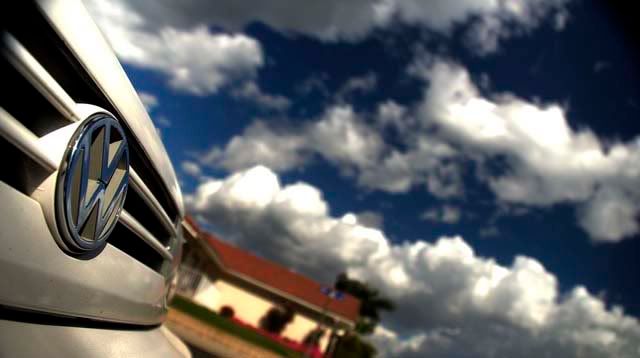
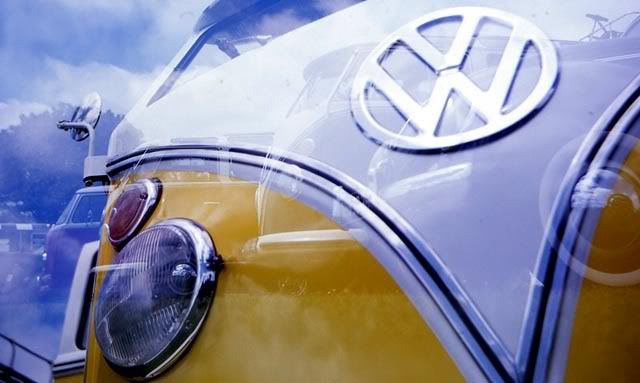
Volkswagen


Source: TheSamba
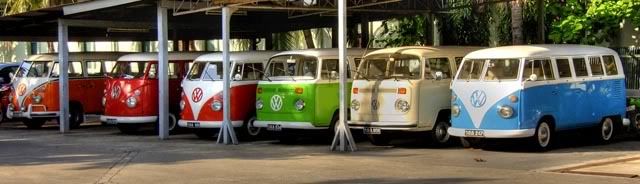
You wouldn’t know it from the company’s website but Volkswagen (German for "People’s Car") can trace its history straight to the villain of World War II: Adolf Hitler.
Here’s the short version of the story: After World War I, Germany’s economy was shot and cars cost more than most people can afford. When Hitler rose to power and became Chancellor, he spoke at the 1933 Berlin Auto Show of his idea to create a new and affordable car.
At the same time, Ferdinand Porsche (yes, that Porsche) was designing an odd-looking yet inexpensive car (which would later become the Volkswagen Beetle). Porsche met with Hitler in 1934, who asked that the car to have the following specifications: it should have a top speed of 100 km/h (62 mph), a fuel consumption of 42 mpg, and could carry 2 adults and 3 children. He said the car should look like a Maikaefer – a May beetle and even gave Porsche a sketch of the basic design. Porsche promised to deliver the design, with prototype cars to be built by Daimler-Benz.
In 1937, the Gesellschaft zur Vorbereitung des Deutschen Volkswagens mbH was created (it became simply Volkswagenwerk GmbH a year later). In 1938, Hitler opened the state-funded Volkswagen factory in Wolfsburg, which was to produce the KdF-wagen (kraft durch freude, meaning "strength through joy"). Few were actually built, instead, the factory (employing forced labor) churned out military car, based on the same chassis: the Kübelwagen, Schwimmwagen, and Kommandeurwagen.
It was later found out that Hitler had this in mind all along. He added an extra secret specification to Porsche’s design: the car was to be able to carry 3 men, a machine gun, and ammunition.
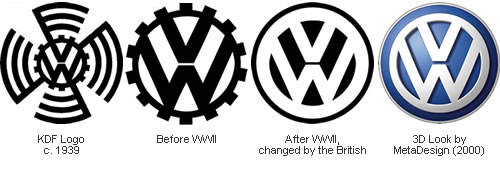
After Germany was defeated in World War II, the British took over the Volkswagen factory and the KdF-Wagen was renamed the Beetle. The British then sought to give control of the company – first they asked the Ford Motor Company, then the French Government, other British car manufacturers and lastly, Fiat. All turned down this "free offer" because they thought the Beetle’s design was inferior and that the company would be a money drain. (Source: The Auto Channel)
So, the British gave the Volkswagen company back to the German government in a trust. Later, having sold more than 21 million cars, the Volkswagen Beetle would become one of the world’s best selling cars ever.
The VW logo itself was supposedly designed by Franz Xavier Reimspiess, an employee of Porsche, during an office logo design competition. He was given a one time payment of 100 Reichsmarks (about $400).

If you didn’t see your favorite car’s logo history, chances are it is because its logo didn’t change much over the years. There are also dozens of large car companies in the world (many more if you counted the defunct ones), and we couldn’t fit every single one in this article. If I missed anything, please let me know in the comment.
by neatorama.com

The History Behind Car Brands review and news icon

Origins of Auto Emblems or logos

 review and news  icon


Logos and emblems are less important in the automotive world than what auto designers call “down the road graphics. The goal is that from a distance the three dimensional form of a vehicle read itself reads a flat image, a stop-action graphic. Ideally, the brand of the vehicle should be visible form the any angles. The term “Down the road graphics” have to be visible from all angles, including the most oblique ones.

ALFA ROMEO


Alfa Romeo hails back to the city arms of Milan and the 12th century bishop who bestowed them.

AUDI


Audi’s four rings have nothing to do with the Olympics but represent the juncture of four earlier German auto companies in 1932. Horch, DKW, Wanderer and Audi were forced to ally by depressed market conditions to form Auto Union. After the war, the company finally took the name Audi which is Latin for “I hear,” a translation of the name of August Horch, founder of the company that bore his name, but kept the Auto Union rings.

BMW


Bayerische Motoren Werke AG (Bavarian Motor Works) or best known as BMW,has its own interpretation towards its logo. BMW’s circle with blue and white quadrants is an interpretation of the image of a spinning propeller, powerfully simple as an early airline poster and suggesting the company’s beginnings in building aircraft engines.

CADILLAC


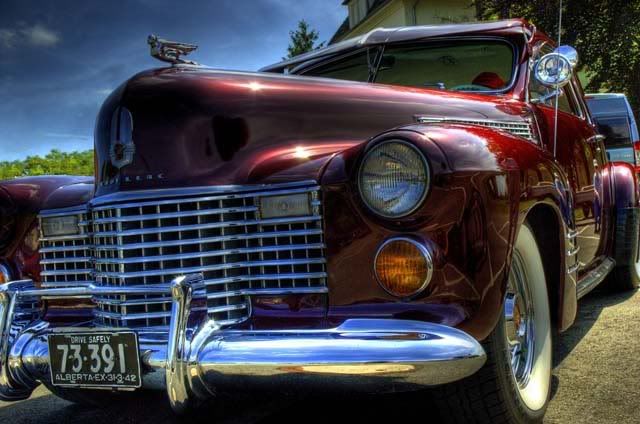
The original Cadillac logo is based on the family crest of the man for whom the company was named, the Gascon officer and minor aristocrat who founded Detroit in 1701-Antoine de La Mothe, Sieur de Cadillac. His coat of arms, like many family coats of arms, appears to have been concocted and borrowed from a nobler neighbor. This may be appropriate for a car that has often appealed to the self-made man-if the not the nouveau riche hustler.

CHEVROLET


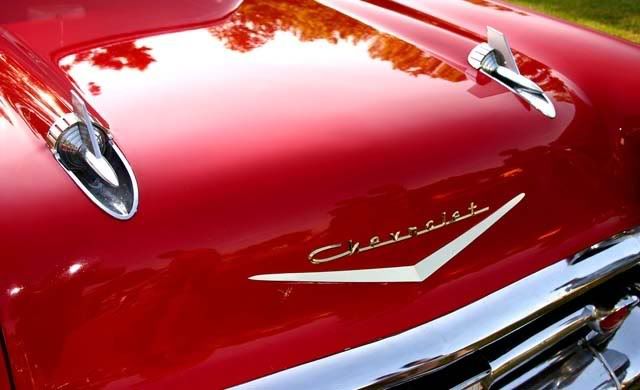
The Bowtie logo was inspired by the wallpaper at the hotel where William Durant, the General Motors founder stayed back in 1907. Since then, based on the wallpaper design, he created endless designs for the car that bears the name of Louis Chevrolet, a famous race driver at that era. Durant envisioned the bowtie design as symbolizing “The Heartbeat of America.

FERRARI


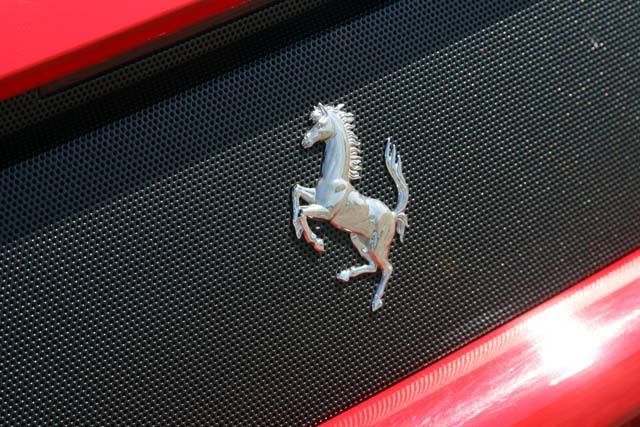
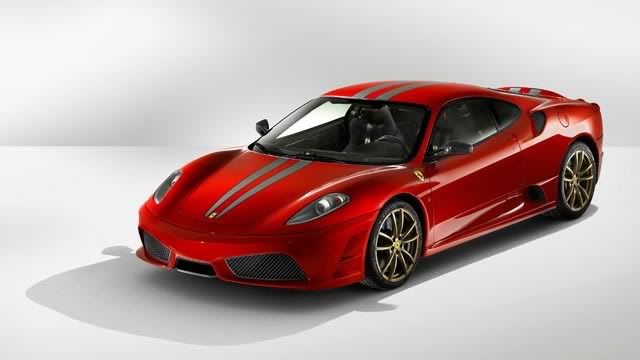
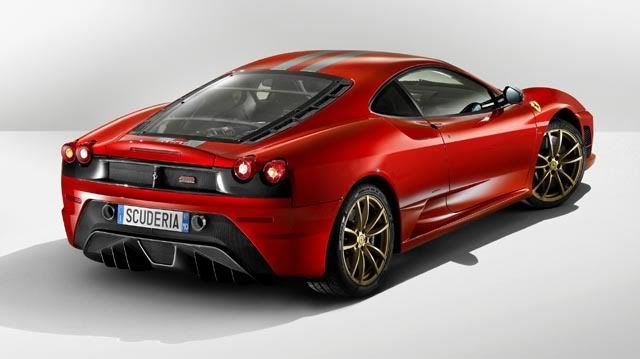
Ferrari’s rearing stallion has roots in insignia of World War I Italian fighter. Citroen’s chevrons come from stylized gear teeth.

FIAT


Some logos evolve but, like Time Warner’s infamous “IUD,” are abandoned in favor of their predecessors. In the 1980s Fiat supplanted its pre war, wreathed emblem in favor of a Scrabble piece letter logo. The story goes that Fiat design chief Mario Maioli was driving past the company’s Mirafiori factory one night in 1982 during a power outage. He noted a neon sign outlined against the dark sky, bearing the letters FIAT and was inspired to sketch a new logo.

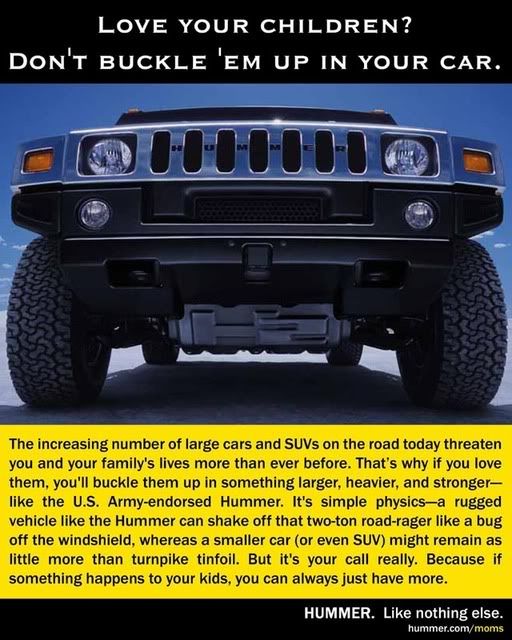
HUMMER


Best H logo. Hummer dealerships are built around a giant “H” that functions as both entrance and supergraphic visible from highways. But the best H logo was that of Horch, the prewar German company that enjoyed a status not unlike Buick in the U.S. Its H was formed to suggest the gateway of a city or castle-an image of sturdy tradition.

JEEP:


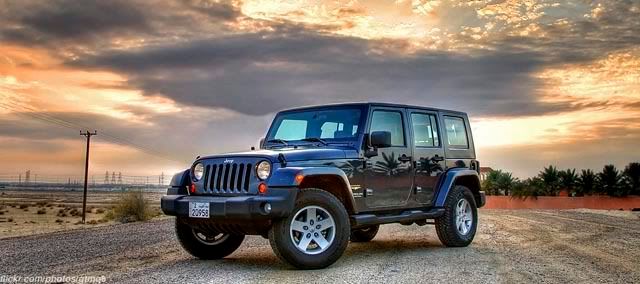
Jeep, originated from General Purpose, rolled out what the company called its first logo ever: “A graphic representation of the front grille and windshield of the Wrangler, the icon of the Jeep brand depicts the strong styling cues of the Wrangler, the seven-slot grille, round headlights and rectangular windshield.” Jeep is one of the best known brands in the world, that it should not have a logo or emblem is surprising. The image elicited by the word “Jeep” is clear as a logo that represent a vehicle, boxy and basic and outstanding .
MERCEDES


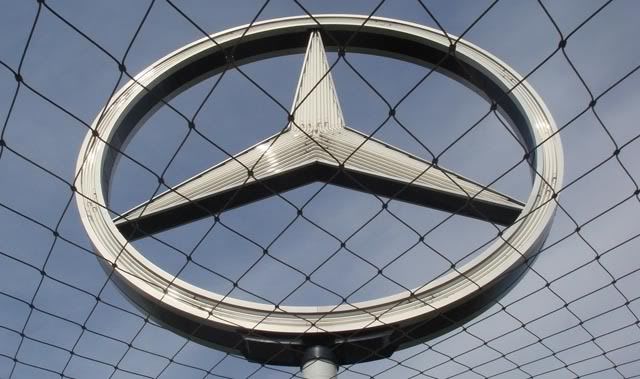
Mercedes tri star, the story goes, was inspired by a star Gottlieb Daimler penned on a post card of Cologne, marking where he was living and sent to his children. Today, a rotating tri star is visible on the skyline of almost every German city. Benz brought the wreath when Mercedes and Benz merged in the 1920s. The ring around the tristar was patented in 1923.
MAYBACH


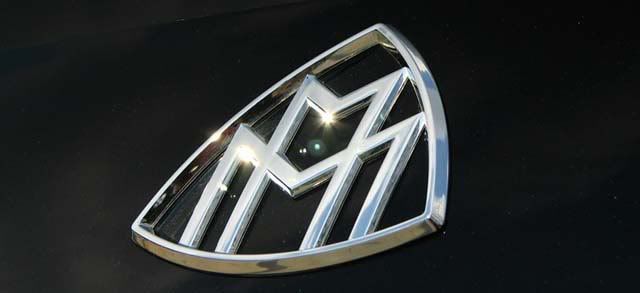
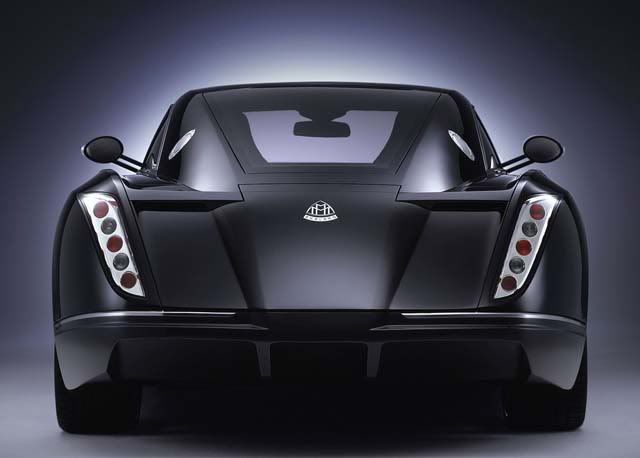
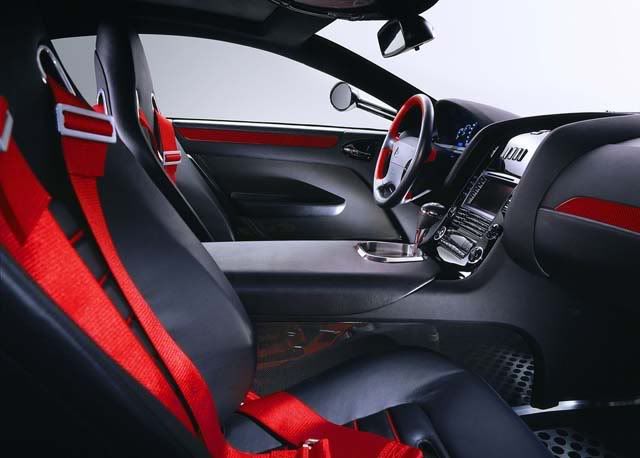
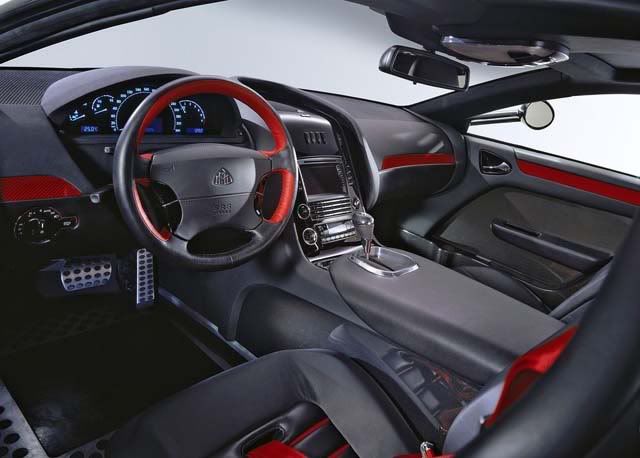
In reviving the super luxury Maybach brand of the 1920s, when it was favored by maharjas and marquis, Mercedes updated an almost Wiener Secession looking “M.”

OLDSMOBILE


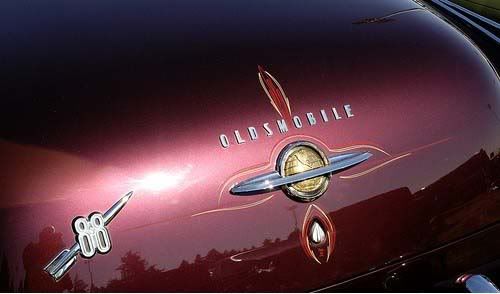
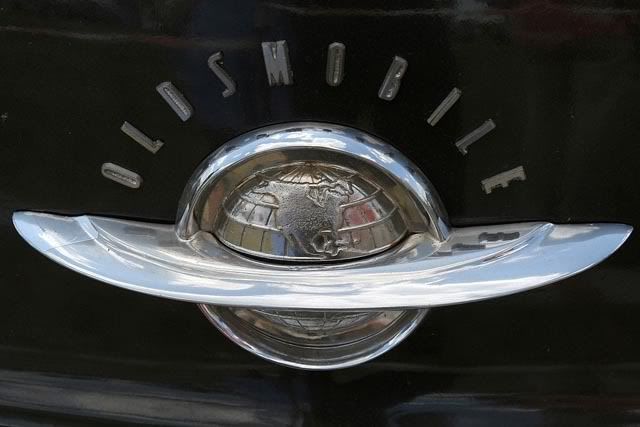
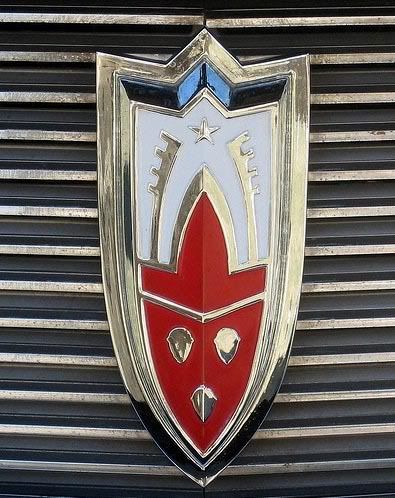
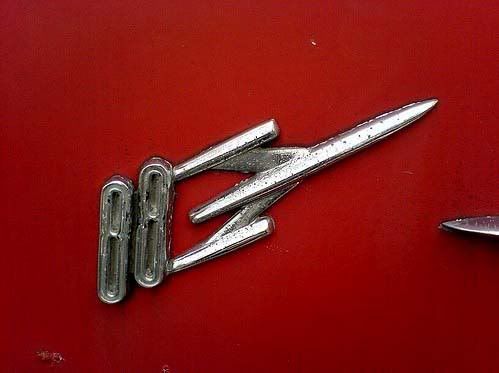
The 1950s and 1960s were great years of exuberant auto graphics-as they were for auto bodies. I recall from childhood the Oldsmobile globe-in-a-ring and rocket emblems, and the Rocket 88 symbol-part Werner Von Braun, part Chesley Bonestell-images that made the unabashed conation between motoring and space flight.

PORSCHE


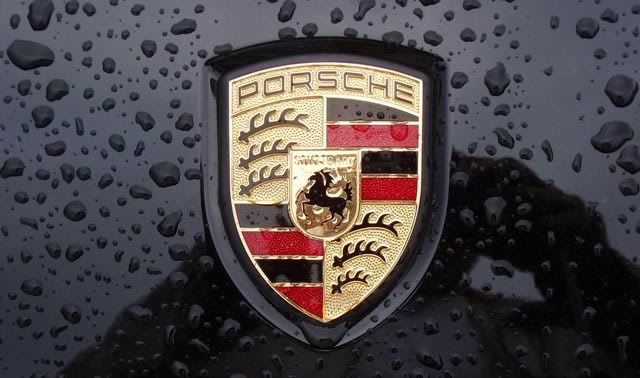
Porsche borrowed arms from the city of Stuttgart, where it located its headquarters.

VOLKSWAGEN


Volkswagen’s iconic buttressing of V and W was the creation of an engineer named Franz Reimspiess, the same man who perfected the engine for the Beetle in the 1930s. He won fifty marks in an office competition to do the job. Before WW II, when the car was still Hitler’s “Strength through Joy” car the logo was surrounded by the gear shaped emblem of the German Labor Front that built it.

SUBARU


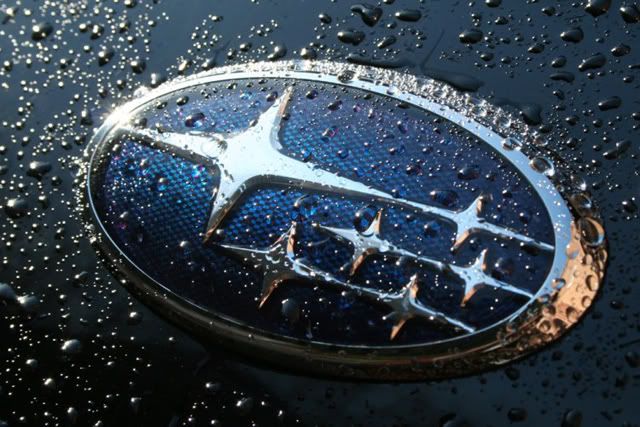
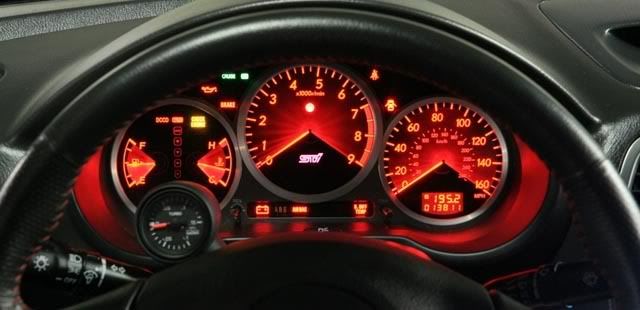
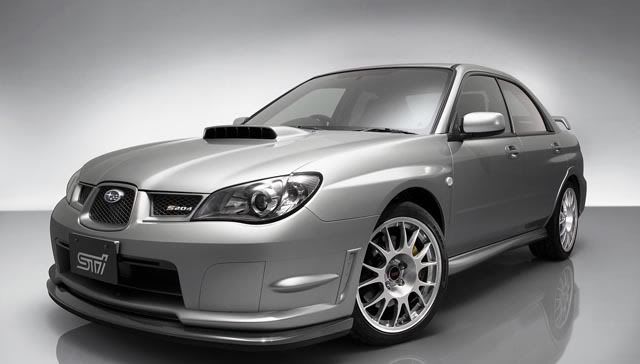
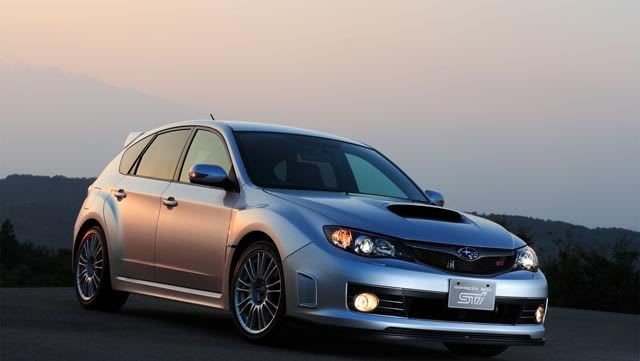
Coolest recent logo: Subaru’s five star logo refers obscurely to the keiretsu joined together in the parent company Fuji Heavy Industry. But this the new high performance road rally inspired Sti model (for Subaru Technology) arrived with a hot pink and high (graphic) fashion logo on its horn button, side panels, radiator and two or three more places. The parallel looping lines of the Sti logo suggest hip retro graphics such as old American basketball association expansion team emblems or the recent logo for the band OK Go by Stefan Sagmeister.
Adapted from The Language of Auto Emblems, pictures are courtesy of Flickr and Fastwallpapers.com